

The clock is ticking.
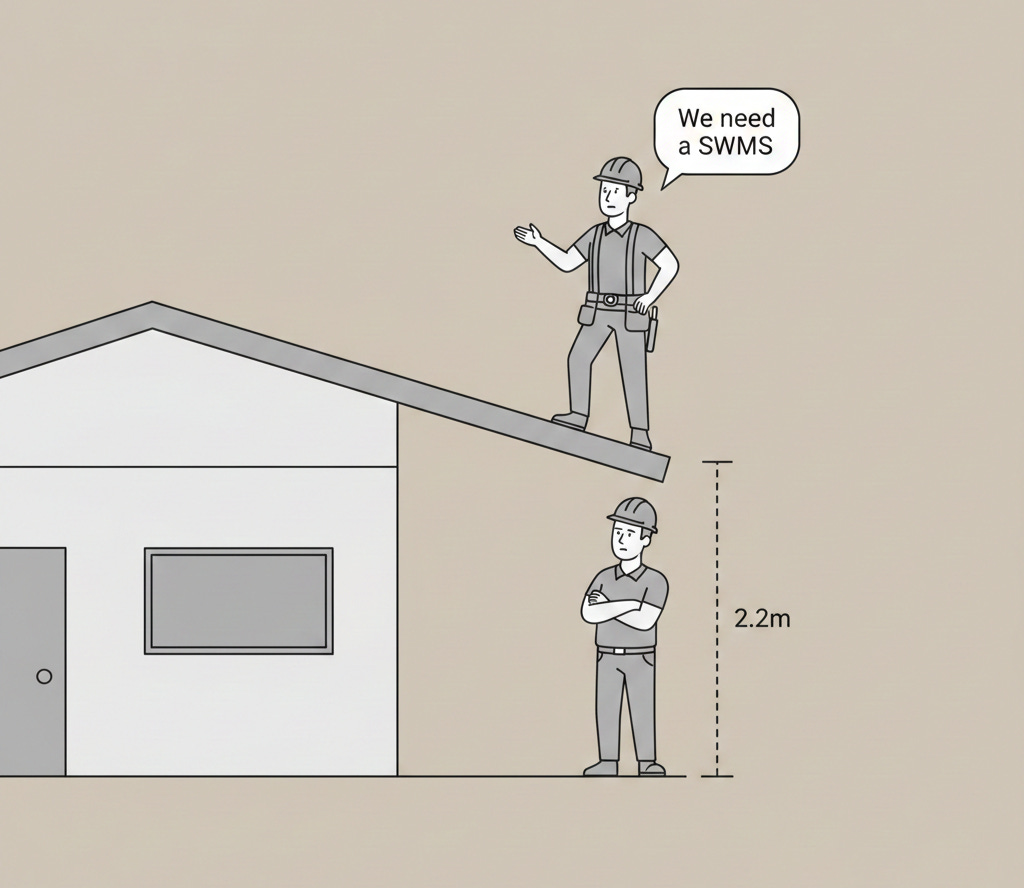
In July 2026, South Australia’s WHS (High Risk Construction Work) Amendment Regulations 2025 come into effect — and if you’re an electrical contractor working on roofs, you need to understand what’s changing.
What’s Changing
The threshold for “working at heights” drops from three metres to two metres.
That single metre makes a significant difference. Any task performed at or above two metres will now be classified as High-Risk Construction Work (HRCW) under the amended regulations. This aligns South Australia with the national model WHS laws that most other states already follow.
For electrical contractors, this isn’t just a regulatory footnote. It’s a volume multiplier.
Who’s Affected
If your work involves any of the following, you’re in scope:
Solar panel installations on residential rooftops
Rooftop HVAC electrical connections
Antenna and communications equipment mounting
Gutter and fascia lighting installations
Switchboard upgrades in elevated plant rooms
Temporary builder’s supply connections on multi-storey sites
The two-metre threshold captures the majority of single-storey residential roof work. A standard Australian home has eave heights between 2.4 and 2.7 metres — meaning nearly every rooftop electrical task now requires formal HRCW documentation.
The SWMS Volume Problem
Under HRCW requirements, a Safe Work Method Statement (SWMS) must be prepared before work begins. The SWMS must be specific to the task and the site — generic templates that worked at three metres won’t pass scrutiny at two metres.
For electrical contractors, this creates a compounding documentation burden:
More tasks qualify — Jobs that previously fell below the threshold now require SWMS
Site specificity matters more — Roof pitch, access points, overhead lines, and fall arrest anchor locations must be documented
Review cycles increase — Principal contractors (especially Tier 1) will scrutinise HRCW documentation more closely given the regulatory change
If you’re submitting the same template you used last year, expect rejections.
What to Do Now
1. Audit your current SWMS library
Review every template that mentions rooftop work, solar installations, or elevated tasks. Check whether the documented height threshold matches the incoming two-metre standard. Update references accordingly.
2. Map your common job types
List the 10 most frequent tasks you perform that involve elevated work. For each, identify:
Typical working height
Standard fall protection method
Site-specific variables (roof material, pitch, anchor points)
This exercise surfaces which templates need the most work before July 2026.
3. Build site-specific detail into your process
Generic hazard lists won’t cut it. Your SWMS needs to specify:
The actual fall distance at that particular site
The exact isolation points if working near switchboards
The fall arrest system configuration for that roof type
If your current process involves selecting from dropdown menus and clicking “generate,” you’ll need to add a site assessment step.
4. Brief your team
Anyone preparing or reviewing SWMS needs to understand the threshold change. Subcontractors especially — they’ll be the ones submitting documentation that you’ll be accountable for.
The Bigger Picture
South Australia’s amendment is part of a broader national harmonisation effort. The two-metre threshold already applies in most other jurisdictions under model WHS laws. If you work across state lines, this change simplifies your compliance baseline — but only if your documentation is genuinely site-specific.
Regulators aren’t looking for more paperwork. They’re looking for evidence that you’ve actually assessed the risks at each site and implemented appropriate controls. The fall height change increases the scope of what counts as high-risk. Your documentation needs to match that reality.
July 2026 will be here before you know it.
Start the audit now.
Sources: